
BBL Learning Research Insight
Introduction: The International Development Consultant as a Designer of a Better Life
1.1 A Shared Challenge: A New Era of International Development Cooperation
The challenges that humanity faces today, including poverty, climate change, and public health crises, are not issues that can be resolved by any single country acting alone. Rather, they are complex and interconnected global problems that require coordinated international responses. These challenges transcend national borders and directly affect the lives of people across the world. For this reason, close international cooperation and collective action among countries are essential.
In this evolving context, international development cooperation is no longer understood as a one-directional or charitable activity aimed at assisting less developed countries. Instead, it has become a shared global agenda that must be addressed collectively, functioning as an essential system for achieving sustainable development. This transformation indicates that international development cooperation is no longer optional but has become a structural component of global governance.
Modern international development is no longer limited to the provision of material or financial assistance. It is fundamentally a process of enabling local communities and individuals in developing countries to strengthen their own capacities and build sustainable systems that allow them to solve their own development challenges. Within this process, Official Development Assistance (ODA) has evolved from a government-centered and rigid structure into a more flexible and multi-actor cooperation ecosystem, in which the innovation capacity of the private sector and the engagement of civil society play an increasingly important role (United Nations, 2015).
1.2 Structural Transformation of the Ecosystem and the Increasing Role of Field-Based Professionals
At the core of this structural transformation is the role of professionals who directly engage in designing, implementing, and managing development projects in the field. In particular, as development projects increasingly combine the technical capabilities of private sector organizations with the adaptive problem-solving capacities of consulting institutions, private development professionals are now recognized as essential actors in ensuring project success (OECD, 2011).
In the Korean international development cooperation ecosystem, this transformation is also clearly observable. Professional networks such as the Consulting Association for International Development (CAIND) play an important role in facilitating knowledge sharing among practitioners, strengthening professional networks, and contributing to the development of a more effective Korean ODA system through knowledge-based collaboration.
1.3 The Key Implementing Actor in Development Projects: The International Development Consultant
Contemporary international development projects are characterized by the integration of multiple sectors, including health, education, agriculture, and digital transformation. This complexity requires a high level of integrated project management capability. The professional responsible for designing, implementing, and coordinating such complex projects across multiple stakeholders is the International Development Consultant (IDC).
An international development consultant is not merely a technical analyst or supporting expert. Rather, the consultant is a field-based professional responsible for designing the overall structure of development interventions and ensuring that projects function effectively in real-world contexts through coordination among diverse stakeholders (Feeny & Schulz, 2019). Therefore, the performance and sustainability of development projects are directly influenced by the competency level of these consultants.
1.4 From Individual Experience to Collective Knowledge
Despite the central role of international development consultants within the development ecosystem, efforts to systematically define and structure their professional competencies remain limited. Although many practitioners have accumulated extensive field experience, there is still no universally accepted framework that clearly defines the competencies required for effective performance in this role.
As a result, the question of what constitutes a “competent international development consultant” is still largely answered based on individual experience and intuition. This lack of standardized competency definition often leads to variability in project performance quality.
In addition, there are limitations in the field of human resource development and training. Many training programs continue to rely on traditional lecture-based approaches without a competency-based design framework, which limits their effectiveness in developing practical problem-solving capabilities required in real project environments.
Furthermore, individuals who are interested in entering the field of international development often face difficulties in identifying the specific competencies required for career development, due to the absence of structured guidance and competency roadmaps. This creates an invisible barrier to entry for potentially capable professionals.
Based on this context, this study addresses the following two research questions:
First, what are the core competencies required in the field of international development practice?
Second, how do these competencies interact within the structure of the Project Cycle to generate development outcomes?
This study reinterprets the competencies of international development consultants not as a simple list of skills, but as an integrated system embedded within the operational structure of the Project Cycle. Through this approach, individual experiential knowledge is transformed into structured professional knowledge, which functions not only as a tool for individual career development but also as a collective knowledge asset for the entire sector.
💡 BBL Insight #01. The Moment That Experience Becomes an Asset!
Fragmented field experience is not yet knowledge—it is raw material.
Only when it is placed within a structured analytical framework does it transcend individual memory and mature into a public asset of universal value.
2. Systematizing Field Knowledge: The Beginning of Professional Competency Discourse
2.1 Expansion of the Korean ODA Ecosystem and the Increasing Sophistication of Consultant Roles
The international development cooperation sector in Korea has undergone continuous quantitative and qualitative transformation driven by the institutional consolidation of Official Development Assistance (ODA) systems and the steady expansion of its budgetary scale. As public-sector aid delivery structures have become more systematized, a multilayered ecosystem has emerged involving research institutions, consulting firms, private enterprises, and civil society organizations.
Within this evolving environment, the role of international development consultants has expanded beyond simple knowledge transfer or implementation support. Consultants are now increasingly expected to function as designers who structurally organize project logic and demonstrate development results in a coherent and evidence-based manner.
In particular, as the performance guidelines of the Development Assistance Committee (DAC) of the Organisation for Economic Co-operation and Development (OECD) have become an international benchmark, consultants are now required to clearly demonstrate causal relationships across the entire intervention logic, commonly framed as Theory of Change (ToC).
Accordingly, strategic project management competency that operationalizes field requirements into structured frameworks such as the Project Design Matrix (PDM) has emerged as a core professional capability. Consultants are increasingly expected to manage the entire project lifecycle through a results-oriented approach grounded in structured logic and measurable outcomes.
At the same time, ensuring accountability within project implementation processes has become another critical dimension of professional competency. Accountability in this context goes beyond simple administrative compliance; it involves systematically managing inputs and outputs within implementing agency guidelines while ensuring transparency and institutional credibility. However, due to the high dependence on individual experience in executing such procedures, consultants often expend significant effort on procedural adaptation rather than focusing on substantive development outcomes.
As a result, today’s international development consultants are required not only to possess sector-specific technical expertise but also to demonstrate integrated capabilities that combine global project management frameworks with the ability to systematically validate development value and results.
2.2 The Need for Systematic Competency Development
Major international organizations, including the United Nations, the World Bank, and the OECD, as well as bilateral agencies such as the Korea International Cooperation Agency (KOICA), have developed structured competency frameworks to support professional development and organizational performance management.
These frameworks function as guiding systems that balance individual professional development with clearly defined competency expectations, thereby reducing uncertainty in career progression and supporting structured capacity building.
In the Korean ODA ecosystem, individual field experience has historically served as a key asset for sectoral development. However, when such experience is not systematically codified into a shared professional language, competency accumulation remains confined to individual trajectories, limiting knowledge transfer and intergenerational learning.
Given the multidisciplinary nature of international development consulting, the absence of even a minimal shared understanding of core competencies can lead to inefficiencies in translating training into practical field performance.
Moreover, the absence of structured competency frameworks increases systemic opportunity costs within the ecosystem. Variability in professional capability may negatively affect the perceived quality of Korean ODA projects and, in turn, influence the international credibility of Korea’s development cooperation efforts.
Although no framework can fully capture all complexities of field implementation, the systematic structuring of fragmented experiential knowledge into an objective competency development system is essential. This process enables the transformation of individual experience into collective professional capital and supports the development of sustainable talent pipelines.
2.3 Practical Efforts and Strategic Direction for Competency Enhancement
In this context, efforts to structurally define and systematize the competencies of international development consultants are becoming increasingly important. A competency-based approach is widely recognized as an effective methodology for structuring knowledge, skills, and behavioral attributes and linking them to training, evaluation, and professional development systems.
The Consulting Association for International Development (CAIND) has been actively contributing to this agenda by promoting professional development programs, building expert networks, and facilitating knowledge sharing across the Korean ODA ecosystem. Through these efforts, CAIND plays a central role in transforming fragmented field experience into standardized professional competency structures.
In order for Korea’s international development sector to advance further, structural consolidation of professional competencies must accompany its quantitative expansion. This requires continuous efforts to define core competencies systematically and align them with professional development systems.
Ultimately, the role of international development consultants should be redefined as that of strategic designers and implementers who analyze complex environments, design collaborative structures, and generate sustainable development outcomes. This professional identity can only be fully established when the complexity and public nature of international development work are properly understood and internalized as a professional discipline.
💡 BBL Insight #02. From Execution Skills to Strategic Architecture!
The identity of an international development consultant does not end with task completion.
It begins there—and evolves into something greater: a strategic architect who designs, structures, and logically substantiates development value and outcomes.
3. The Distinctiveness of International Development Consultants
Consulting refers to a professional service activity that analyzes organizational or policy-related problems and provides structured solutions. While consulting is widely applied in management, policy, and technical fields, its primary objective is typically to improve organizational performance or efficiency.
However, the role of international development consultants differs from conventional management consulting in several fundamental ways, despite sharing certain methodological similarities.
First, international development consulting is fundamentally grounded in public value creation. Development cooperation projects are largely financed through public resources aimed at supporting socio-economic development in developing countries. Therefore, project outcomes must extend beyond organizational performance and contribute directly to broader societal transformation and development outcomes (OECD, 2019a; Riddell, 2008).
Second, international development consulting operates within a multi-layered governance structure involving diverse stakeholders, including donor governments, recipient governments, international organizations, civil society, private sector actors, and local communities. Within this structure, consultants act not only as technical experts but also as coordinators who mediate conflicts and facilitate collaboration among stakeholders (World Bank, 2011; Brinkerhoff, 2002).
Third, international development consulting requires a high level of understanding of cultural and institutional contexts. Projects are implemented in environments that differ significantly from those of donor countries. Therefore, contextual awareness and cultural intelligence are critical determinants of project success (Denizer et al., 2013; Hofstede, 2001).
Fourth, international development consulting is conducted in highly uncertain and dynamic environments. Development contexts are influenced by political, economic, and social variables that change unpredictably, requiring consultants to adopt adaptive management approaches rather than rigid adherence to predefined plans (Andrews et al., 2017).
These characteristics demonstrate that international development consultants require a more complex and integrated competency structure than conventional consultants. They must operate across the entire project cycle, engaging in planning, implementation, monitoring, and evaluation within a continuously evolving collaborative environment.
💡 BBL Insight #03. Beyond Efficiency, Toward Value Architecture!
In complex governance systems, true expertise is not defined by technical superiority alone.
It emerges from the subtle discipline of navigating competing values—and identifying the most workable, yet meaningful, point of convergence.
4. Professional Identity as a Profession: The Integration of Knowledge and Responsibility
A profession is generally defined as an occupational category that generates social value based on highly specialized knowledge and a high degree of autonomy, while simultaneously being subject to strong expectations regarding responsibility and ethical conduct (Abbott, 1988; Freidson, 2001). Professionals operating within such occupations transform disciplinary knowledge into practical problem-solving capabilities and act on the basis of social trust and public accountability.
Considering the characteristics discussed above, international development consultants share essential attributes of a professional occupation. They are not merely technical service providers, but professional actors whose work is grounded in autonomy, expertise, and social responsibility.
More specifically, the professional characteristics of international development consultants can be understood as follows.
First, their work is based on specialized knowledge systems and analytical capabilities required to address complex development problems. International development projects deal with so-called “wicked problems,” such as poverty, public health crises, and climate change, which cannot be resolved through simple or linear solutions. Therefore, consultants must possess the analytical capacity to interpret complex socio-economic contexts and translate them into policy-relevant and programmatic strategies (Abbott, 1988; Head & Alford, 2015).
Second, international development consultants are subject to strict professional ethics and social accountability due to the use of public resources. Transparency and fairness are core values in development cooperation. Since consultants’ decisions and project designs directly affect the lives of local populations and institutions, they are required to adhere to higher ethical standards and stronger professional responsibility than ordinary service providers (OECD, 2019a).
Third, they function as coordinators who generate value among multiple stakeholders. In complex governance structures involving governments, international organizations, private sector actors, and civil society organizations, consultants play a central role in aligning interests and facilitating the achievement of meaningful development outcomes (World Bank, 2011).
Taken together, these characteristics indicate that international development consultants should be understood not merely as project implementers but as professionals who contribute to development outcomes through structured expertise and ethical responsibility. In particular, they play a critical role across the entire project cycle, from design to implementation and evaluation, within the international development ecosystem.
💡 BBL Insight #04. From Knowledge Ownership to Value Sharing!
True professionalism is never about owning an elevated system of knowledge.
It is completed only when that knowledge is transformed into practical courage—solving real-world problems while remaining accountable to ethical responsibility.
5. The Ecosystem Characteristics of International Development Projects in Korea
5.1 National Competency Standards (NCS) and Job Definition
In Korea, systematic efforts have been made to define occupational roles in the international development cooperation sector. For example, the National Competency Standards (NCS) provide structured definitions of job functions, competencies, and task units relevant to international development cooperation roles.
The NCS is a national framework designed to systematize the knowledge, skills, and attitudes required for job performance and to support education and workforce development systems. In the field of international development cooperation, it defines various job functions such as project planning, project management, and performance management, providing a useful reference for understanding basic occupational structures in development projects.
However, the NCS framework primarily focuses on task-based job descriptions and has limitations in explaining the integrated competency structure required across the entire project lifecycle of international development consulting. Therefore, additional competency frameworks that integrate project processes with professional roles are required to fully explain the competencies of international development consultants
5.2 Multilayered Collaboration Structures and Integration of Professional Competency
International development projects are implemented not through the capacity of a single expert, but within a multilayered collaborative structure in which professionals with diverse backgrounds and areas of expertise interact dynamically.
Within this structure, multiple levels of professional roles coexist, ranging from operational support functions that ensure administrative stability, to project management roles that oversee implementation, to technical experts who provide sector-specific expertise. For example, roles such as Project Action Officer (PAO), Field Manager, and Project Manager in Korea International Cooperation Agency (KOICA) projects illustrate how complex project functions are systematically distributed and integrated.
A critical characteristic of this ecosystem is the dynamic nature of professional entry and career progression. Some professionals advance from operational and administrative roles into project management positions through accumulated implementation experience, while others enter the field directly as technical consultants based on sectoral expertise in areas such as health, education, agriculture, or digital transformation.
Ultimately, the competency of international development consultants cannot be reduced to isolated technical proficiency. It is fundamentally defined by the ability to integrate one’s own specialized expertise into the multilayered collaborative structure and the project cycle in a flexible and strategic manner. Through this structural integration, consultants evolve into strategic designers who contribute to overall project performance rather than isolated task execution.
5.3 Project Phase Structure and Consultant Engagement
International development cooperation projects in Korea are typically implemented through structured phases, including feasibility studies, baseline studies, and full project implementation phases (KOICA, 2021).
The feasibility study phase focuses on analyzing development problems and assessing the viability of project implementation. The baseline study phase involves establishing initial conditions and performance indicators prior to project implementation. The implementation phase involves the actual execution of development interventions.
Each of these phases has distinct objectives and functions, and consultants are often engaged differently depending on the phase. In many cases, consultants are recruited through competitive procurement processes, which means that the same expert is not necessarily involved across all phases of a project.
Therefore, competency models for international development consultants should not be limited to a single project phase but must be designed to encompass the entire project lifecycle.
💡 BBL Insight #05. The Value of Expertise Lies in Integration!
The real competence of an international development consultant is not isolated technical mastery.
It is the ability to strategically integrate one’s expertise into multilayered project structures with flexibility and intent.
This is not just execution. It is the disciplined ability to see the entire project landscape while acting within it.
6. The Need for a Project Cycle–Based Competency Model
International development projects are generally designed and implemented as project-based interventions. A project is not a single activity but a structured process that includes planning, implementation, monitoring, evaluation, and learning. To understand this structure, the concept of the Project Cycle is widely used in international development practice (OECD, 2019b).
The Project Cycle provides a systematic framework for managing development interventions and maximizing results. Internationally, this approach is institutionalized as Project Cycle Management (PCM), which is used by major development organizations such as the OECD, United Nations Development Programme (UNDP), the World Bank, and the Korea International Cooperation Agency (KOICA).
PCM functions as a management tool that enhances the likelihood of achieving project objectives by systematically analyzing risks and ensuring structured decision-making throughout the project lifecycle. It includes processes such as objective setting, feasibility analysis, stakeholder analysis, resource allocation, monitoring, evaluation, and learning (European Commission, 2004).
International development consultants participate across all phases of the Project Cycle. They are not limited to technical support in a single phase but are involved in needs analysis and strategic design during the planning phase, coordination and implementation management during execution, and performance evaluation and policy recommendation during the evaluation phase.
Therefore, a competency model for international development consultants must encompass the entire project cycle and clearly link competencies to each stage of project implementation.
Traditional job-based competency models tend to focus on organizational employees and fixed job descriptions. In contrast, international development consultants operate across multiple organizations and project contexts, with highly flexible roles. For this reason, a Project Cycle–based competency model is more appropriate for defining their professional capabilities..
💡 BBL Insight#06. Turning Fragmented Experience into Structured Expertise!
When individual tasks are reconnected to the full project cycle, experience ceases to be a simple record of activities.
It becomes compressed into structured professional competence.
This transformation is driven by a form of disciplined persistence—the refusal to let practice remain fragmented, and the insistence that every action must contribute to systemic outcomes.
7. Research Methodology for Deriving the Competency Model
This study aims to present a conceptual competency model that systematically explains the roles and competencies of international development consultants. To achieve this objective, the competency model was developed through a combined methodological approach that integrates literature review, practice-based analysis, and expert consultation.
7.1 Analysis of Competency Frameworks of International Development Organizations
To conduct a comparative analysis of existing competency models in the field of international development, this study reviewed the competency frameworks of major international development organizations. The analysis included the following institutional frameworks:
United Nations Competency Framework (2018)
World Bank Leadership Competency Model (2020)
Korea International Cooperation Agency (KOICA) Talent and Competency Framework (2021)
The United Nations and the World Bank primarily design their competency frameworks for internal staff of international organizations, whereas KOICA’s framework is designed for employees within a bilateral development agency context. Although the structure of competency systems differs across institutions, certain distinctions can be observed.
The United Nations framework is primarily structured around core competencies. The World Bank framework integrates core competencies and leadership competencies into a combined structure. KOICA’s framework is largely oriented toward organizational competencies and institutional capability requirements.
In terms of Project Cycle integration, the United Nations and the World Bank partially incorporate project-based competency perspectives, while KOICA reflects project-cycle elements in a more limited manner. Across all three institutions, competencies related to cross-cultural collaboration, network-based cooperation, and project management are partially included.
These institutions have developed structured competency systems for internal human resource development purposes. However, these frameworks are primarily designed for organizational employees and do not fully reflect the role characteristics of project-based professionals such as international development consultants. Nevertheless, they serve as important reference points for identifying behavioral competency patterns required in international development contexts.
Accordingly, this study conducted a comparative analysis of these frameworks to extract commonly required competency elements in international development cooperation environments.
7.2 Practice-Based Analysis (Practice-Based Insight)
The competency model proposed in this study is also grounded in long-term professional experience accumulated in practice. The researcher has extensive experience in human resource development (HRD), including competency model design and talent development system construction in the private sector, as well as participation in international development cooperation projects.
Through this experience, the researcher was able to observe and analyze the competencies required of professionals working in international development contexts. In particular, involvement in the design and implementation of development projects provided direct exposure to the competencies required across multiple stages of the Project Cycle, including project planning, implementation, performance management, and evaluation.
Based on systematic reflection on these experiences, the study identified the core functional structure and competency requirements of international development consultants across different project phases.
7.3 Field Expert Feedback
The initial competency model was further refined through feedback from practitioners with direct experience in international development projects. Consultants and professionals who had participated in development project implementation were consulted to assess the relevance, clarity, and practical applicability of the proposed competency components.
Based on this feedback, several competency definitions were revised to improve clarity, and redundancy between competency categories was reduced. In particular, the importance of collaborative networking, cross-cultural communication, and adaptive capacity in development environments was emphasized in order to better reflect field realities.
7.4 Derivation of the Competency Model Structure
Through the above process, this study structured the competencies of international development consultants into two main dimensions.
First, Project Cycle–based Technical Competencies, which are directly linked to the stages of the international development project cycle. These competencies are structured into four categories: Planning, Operations, Monitoring, and Evaluation.
Second, Core Competencies, which are required regardless of project cycle stage and are essential for professionals operating in international development environments. These competencies are structured into five categories: Cross-Cultural Communication, Analytical Thinking, Integrity, Networking, and Development Adaptability.
💡 BBL Insight #07. From Theoretical Framework to Field Navigation Tool!
A competency model is not a preserved theory on paper.
It is a field navigation system—a practical compass that ensures consultants do not lose direction in the unpredictability of real-world development environments.
8. BBL IDC Competency Model: International Development Consultant Competency Framework
As discussed above, international development cooperation projects are implemented within complex structures that integrate multiple stakeholders and diverse technical domains. In addition, these projects are often structured into phased components such as feasibility studies, baseline studies, and full project implementation, where each phase has distinct objectives and roles.
These characteristics indicate that the competencies of international development consultants cannot be adequately explained through a single job function. Rather, they must be understood through a structured competency system that spans the entire Project Cycle.
The BBL IDC Competency Model systematically organizes the competencies required of international development consultants across the full Project Cycle. The model is structured into two dimensions: Project Cycle–based Technical Competencies and Core Competencies applicable across all stages. [Figure 1] illustrates this structure, providing a visual representation of the professional role and competency system of project-based consultants.
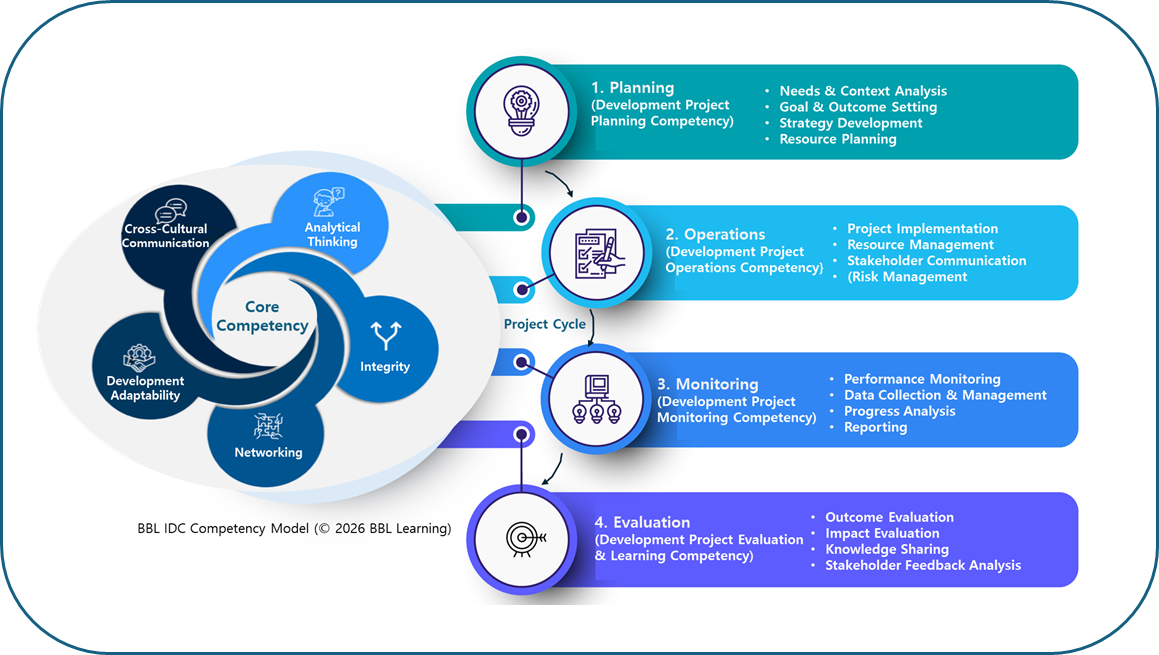
[Figure 1] IDC Competency Model (© 2026 BBL Learning)
8.1 Project Cycle–Based Technical Competencies
International development cooperation projects are generally implemented through a structured Project Cycle, which includes project planning, implementation, monitoring, and evaluation phases. The Project Cycle is widely used in international development practice as a foundational framework for structuring and managing development interventions.
The four circular elements on the right side of the BBL IDC Competency Model represent the four stages of the Project Cycle, and the competencies required at each stage are defined as follows.
Development Project Planning Competency (Planning)
The Planning stage requires competencies in development problem analysis, project design, stakeholder analysis, and logical framework development. At this stage, consultants are responsible for structurally analyzing development challenges and designing project objectives, strategies, and implementation logic.
Development Project Operations Competency (Operations)
The Operations stage requires competencies in project implementation management, coordination of implementing partners, and the professional management of accountability in accordance with implementing agency guidelines. Accountability in this context refers not merely to administrative tasks, but to the structured management of inputs, outputs, and compliance processes necessary to ensure project credibility and institutional reliability.
Project Monitoring Competency (Monitoring)
The Monitoring stage involves tracking project implementation progress and managing performance indicators. At this stage, consultants are responsible for performance indicator management, data analysis, and reporting functions to ensure that project implementation remains aligned with planned objectives.
Project Evaluation and Learning Competency (Evaluation)
The Evaluation stage involves assessing project performance and impact, as well as generating policy and strategic recommendations for future improvement. This includes evaluation design, results analysis, and the formulation of evidence-based learning insights.
These stages collectively demonstrate that international development consultants are required to engage across the full project lifecycle, including strategic design, operational management, performance monitoring, and evaluative learning.
8.2 Core Competencies
International development projects are implemented across diverse cultural, institutional, and socioeconomic contexts. Therefore, there are essential competencies that are required regardless of project cycle stage. The left side of the model presents five core competency domains.
Cross-Cultural Communication
Cross-cultural communication refers to the ability to effectively communicate and collaborate with stakeholders from diverse cultural backgrounds. It includes cultural sensitivity, effective communication, adaptability in communication styles, and active listening.
Analytical Thinking
Analytical thinking refers to the ability to systematically analyze complex development problems and formulate policy and strategic solutions. It includes problem identification, data analysis and interpretation, critical evaluation of alternatives, and strategic synthesis.
Integrity
Integrity refers to ethical conduct and accountability in the use of public resources. It includes transparency, responsibility, fairness, anti-corruption practices, and ethical decision-making.
Networking
Networking refers to the ability to build and maintain collaborative relationships with diverse stakeholders and institutions. It includes partnership development, stakeholder engagement, relationship building, and network utilization.
Development Adaptability
Development adaptability refers to the ability to respond flexibly to changing development environments and local conditions. It includes environmental adaptation, proactive response, resilience, and agile implementation capability.
These competencies are not confined to any specific project phase but are essential across all stages of international development practice.
8.3 Significance of the BBL IDC Competency Model
The BBL IDC Competency Model has multidimensional significance that extends beyond a simple listing of competencies.
First, it contributes to the systematization of professional competencies and the enhancement of the status of international development consultants. By structuring experiential knowledge within a Project Cycle–based framework, it enables consultants to reflect on their professional identity and provides a standardized benchmark for demonstrating competency at an international level.
Second, it establishes a competency-based human resource development infrastructure based on the principle of One Source Multi-Use (OSMU). The model can be operationalized into behavioral indicators (rubrics) and applied across competency diagnosis, training design, performance evaluation, and professional certification systems. This enables efficient use of educational resources and addresses practical competency gaps.
Third, it provides a dynamic career development roadmap with scalability. By linking technical and core competencies, the model enables visualization of professional development pathways from junior to senior levels. When competency levels are defined and aligned with role expectations, the model functions as a practical guide for continuous professional development.
Fourth, it contributes to improving the quality and sustainability of Korean ODA projects. By standardizing and strengthening consultant competencies, it enhances accountability and credibility in project design, implementation, monitoring, and evaluation, thereby reinforcing the international reputation of Korean development cooperation.
💡 BBL Insight#08. Professional Craftsmanship Behind Technical Competency!
Technical competency builds the structural skeleton of a project.
Core competency breathes life into that structure, enabling real transformation in the field.
One creates form.
The other creates movement.
9. Limitations of the Study and Future Research Directions
Although this study represents a meaningful initial step in systematically structuring the roles and competencies of international development consultants through an integrated Project Cycle perspective, it also contains several limitations that must be addressed in order to further evolve the model into a more robust and operational framework.
Need for Empirical Validation Across Field Contexts.
First, although the proposed model has been developed through the integration of major international and organizational competency frameworks and extensive practice-based experience, it has not yet undergone sufficient empirical validation across diverse field contexts.
Future research should therefore focus on verifying the alignment between the proposed competency structure and the actual competencies demonstrated by consultants in different project environments. In particular, sector-specific validation studies should be conducted across key development domains such as health, education, agriculture, and digital transformation.
Such studies would examine how sector-specific technical competencies interact with the proposed framework and how they contribute to or modify competency configurations within the Project Cycle structure. Through this process, the model can be further refined and strengthened in terms of contextual validity and practical applicability.
Development Toward a Living Framework
Second, this competency model is not intended to function as a static evaluation instrument. Rather, it is designed as a Living Framework that continuously evolves in response to dynamic changes in the global development environment.
In the future, emerging areas such as digital transformation, climate change adaptation, and new modalities of development cooperation will require flexible integration into the existing competency structure. The model must therefore remain adaptable and continuously updated in order to reflect evolving global development priorities.
Through this adaptive expansion, the framework is expected to serve as a practical tool that supports international development consultants in establishing and maintaining their professional identity in increasingly complex global contexts.
Integration with Certification and Training Systems
Third, in order to ensure that the model extends beyond theoretical contribution and achieves practical utility in the field, it is necessary to establish explicit linkages with professional certification systems and competency-based training programs.
If the competency framework presented in this study is operationalized into structured behavioral rubrics, it can serve as a basis for objectively assessing professional competency levels. This would enable the development of standardized certification systems for international development consultants.
Such a system would provide dual value. For individual consultants, it would offer recognition of professional identity and competency achievement. For implementing agencies and organizations, it would provide a reliable and standardized basis for selecting qualified professionals.
To achieve this, continuous collective dialogue and refinement of competency standards will be conducted through professional networks such as the Korea Association of International Development Consultants (CAIND). In addition, feedback loops based on field cases will be used to continuously improve the validity and effectiveness of the model.
This iterative process is expected to contribute to the establishment of a sustainable ecosystem in which individual professional growth translates into collective advancement of the development consulting sector.
Conclusion: Redefining the Identity of International Development Consultants Beyond Experience Toward Professionalism
This study has presented a conceptual competency model designed to systematically define the roles and required competencies of international development consultants. Despite the increasing complexity of international development cooperation projects, which are implemented within multilayered institutional and stakeholder environments, efforts to clearly define consultant competencies have remained relatively limited.
To address this gap, the BBL IDC Competency Model was developed by integrating Project Cycle–based technical competencies with five core competencies. The model provides a structured framework tailored to the Korean development consulting context and moves beyond simple task-based descriptions.
More importantly, the model enables international development consultants to establish a clearer professional identity and provides a structured basis for objectively demonstrating their competencies. In this sense, it functions as a practical milestone for both individual professional development and sectoral standardization.
In the future, this model is expected to be extended into a comprehensive system that integrates competency diagnosis, training design, and professional certification through a One Source Multi Use (OSMU) approach based on behavioral rubrics. Such a system will help visualize structured career pathways from junior to senior levels, thereby contributing to the development of a more robust talent pipeline in the international development sector.
Ultimately, the competencies of international development consultants should not remain fragmented at the level of individual experience. Instead, they must be systematized into a shared professional framework that supports reflection, growth, and accountability.
It is the expectation of this study that the BBL IDC Competency Model will serve both as a reflective mirror for individual consultants and as a sustainable reference standard for enhancing the quality and credibility of Korean ODA programs.
💡 BBL Insight #09. Competency as a Growth Trajectory, Not a Fixed Profile!
A competency model is not a measuring stick for labeling professionals.
It is a growth map—a reflective tool that allows practitioners to continuously reassess, refine, and reinvent their professional position.
As more consultants hold such structured maps in hand,
the future of Korean ODA becomes not only more capable—but structurally more resilient.
Reference
한국국제협력단(KOICA). (2021). KOICA 인재상 및 역량체계 보고서. 한국국제협력단.
Abbott, A. (1988). The System of Professions: An Essay on the Division of Expert Labor. University of Chicago Press.
Andrews, M., Pritchett, L., & Woolcock, M. (2017). Building State Capability: Evidence, Analysis, Action. Oxford University Press.
Brinkerhoff, D. W. (2002). Government–nonprofit partnership: A defining framework. Public Administration and Development.
Denizer, C., Kaufman, D., & Kraay, A. (2013). Good countries or good projects? Journal of Development Economics.
European Commission. (2004). Aid delivery methods: Volume 1 – Project cycle management guidelines. Brussels: European Commission.
Feeny, S., & Schulz, L. (2019). The Role of Consultants in International Development. Progress in Development Studies.
Freidson, E. (2001). Professionalism: The Third Logic. University of Chicago Press.
Head, B. W., & Alford, J. (2015). Wicked Problems: Implications for Public Policy and Management. Administration & Society.
Hofstede, G. (2001). Culture's Consequences: Comparing Values, Behaviors, Institutions and Organizations Across Nations. Sage Publications.
OECD. (2011). The Busan Partnership for Effective Development Co-operation.
OECD. (2019a). Better Aid: Managing Aid for Results.
OECD. (2019b). Better Criteria for Better Evaluation: Revised Evaluation Criteria Definitions and Principles for Use. OECD Publishing.
Riddell, R. C. (2008). Does Foreign Aid Really Work? Oxford University Press.
United Nations. (2015). Transforming our world: the 2030 Agenda for Sustainable Development. New York: United Nations.
United Nations. (2018). UN Competency Framework. New York: UN Secretariat.
World Bank. (2011). The World Bank Group's Framework for Engagement with Civil Society. Washington, DC: World Bank.
World Bank. (2020). World Bank leadership competency model. Washington, DC: World Bank.
© 2026 BBL Learning.
All rights reserved.
The BBL IDC Competency Model and the contents of this article are intellectual property of BBL Learning and may not be reproduced, distributed, or transmitted without prior written permission. Academic citation is permitted with proper attribution.
